Stunting
Stunting is low height for age. It usually reflects longer-term growth delay and is not solved by one meal or one day of feeding. It needs attention to diet quality, illness, sanitation, care practices and local health guidance.
Nutrition terms explained
These three terms are often confused. They use different measurements and point to different kinds of growth concern, so a useful calculator should explain them separately.
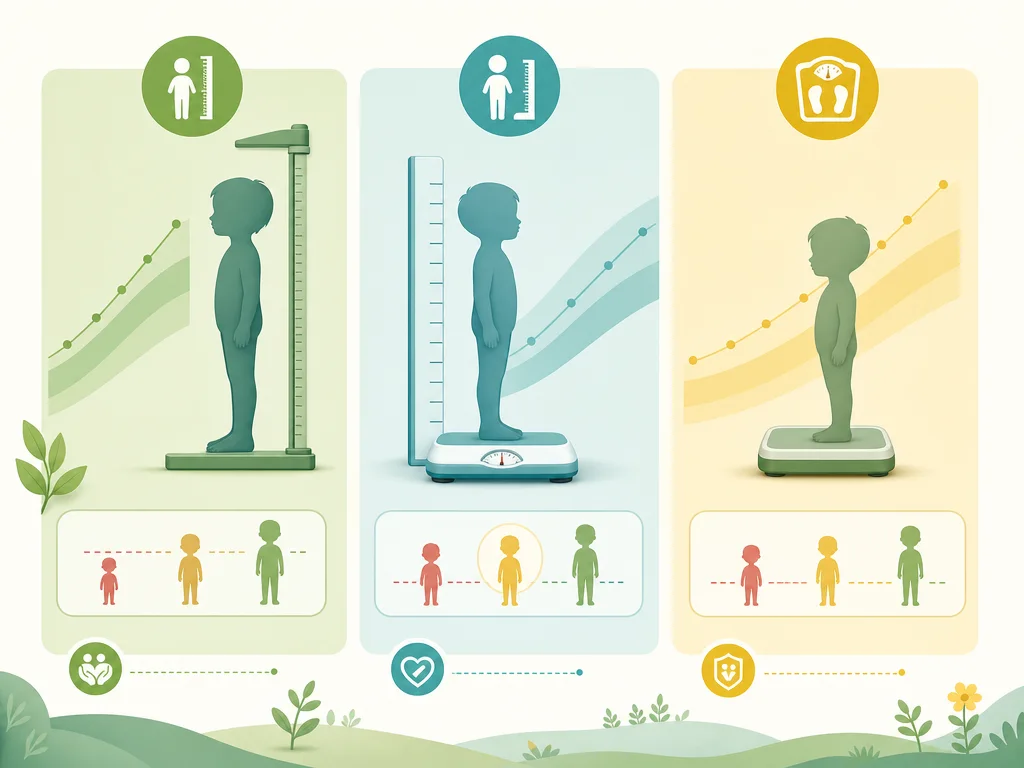
Stunting is low height for age. It usually reflects longer-term growth delay and is not solved by one meal or one day of feeding. It needs attention to diet quality, illness, sanitation, care practices and local health guidance.
Wasting is low weight for height. It can appear more quickly after illness, poor intake or food shortage and may need urgent attention when severe. MUAC is often used alongside wasting to screen for acute malnutrition.
Underweight is low weight for age. It is useful as a first signal but less specific because it can reflect stunting, wasting or both. That is why the Poshan Calculator combines indicators rather than returning only one label.
A child can have more than one screening signal. For example, a child with long-term low height may also have low weight for age. A child who recently lost weight may show wasting and underweight. Looking at only one indicator can hide that pattern.
This is why the main calculator checks weight-for-age, height-for-age, weight-for-height and MUAC together. Each indicator adds a different clue. The result is still only screening, but it gives a more complete picture than a single chart.
Stunting often points to longer-term growth conditions and needs sustained follow-up. Wasting can change more quickly and may need urgent attention when severe. Underweight is a broad signal that tells you to look deeper. These timelines affect how caregivers and workers should respond.
A page that explains timelines is more useful than a page that simply lists definitions. It helps users understand why a child may need routine monitoring in one case and faster referral in another.
Measurements are important, but so are visible and recent changes. Note appetite, fever, diarrhea, vomiting, swelling, activity level, recent weight loss and whether the child is feeding normally. Bring those details to the health worker along with height, weight, age and MUAC if available.
Avoid using the terms as blame. Stunting, wasting and underweight are screening language for health and nutrition support. Families need practical help and clear next steps, not shame.
The calculator gives a quick result; this page explains why the result may name more than one indicator. Linking the two pages helps users move from action to understanding. It also helps Google see that the calculator is supported by a real child nutrition knowledge base.
The latest research showed that content around Z-score, stunting, height-weight chart and underweight can form a durable cluster. This page is part of that cluster and links naturally to the SAM/MAM page for acute malnutrition screening.
Seek help promptly when low measurements appear with very low MUAC, swelling of both feet, poor appetite, severe weakness, repeated vomiting, fever, rapid weight loss or any caregiver concern that feels urgent. The online pages can help organize information, but direct assessment matters most.
If the child is stable but measurements are repeatedly low, plan follow-up rather than ignoring the pattern. Repeated records often tell a clearer story than one isolated number.
Low height-for-age with normal weight-for-height may suggest a longer-term growth concern rather than acute wasting. Low weight-for-height with recent illness can suggest a more recent issue. Low weight-for-age alone should lead to deeper review because it does not say whether height, weight or both are driving the result.
These combinations are why a multi-indicator calculator is more useful than a single chart. A caregiver may search for underweight, but the result may need stunting or wasting context before the next step makes sense.
Nutrition advice should not pretend that one food list solves every growth concern. Feeding quality, illness, appetite, sanitation, care access and household context all matter. A child with severe acute signs needs direct assessment, not only a diet suggestion from a web page.
When discussing food, use practical and local language, but keep the page focused on screening. This site can later add food guidance pages, but the core authority should remain child growth measurement, Poshan Calculator intent and source-backed public-health explanations.
One measurement can be wrong or affected by recent illness. A pattern across dates is more informative. If a child repeatedly falls below expected growth bands or drops suddenly from a previous pattern, that deserves attention even if one reading alone is not dramatic.
Encourage caregivers and workers to record the measurement date, age in completed months, weight, height and MUAC if available. These records make conversations with health workers clearer and reduce guesswork.
Explainer pages can earn links when they make technical terms easier to understand. A parenting blog, NGO resource page or training document may not want to link directly to a calculator, but it may cite a clear page that explains stunting, wasting and underweight.
For that reason, this page includes a comparison image, source links and internal links to the calculator, Z-score guide and SAM/MAM page. It is designed as part of the site's authority layer, not as isolated blog content.
Severe wasting, very low MUAC, swelling, poor appetite or visible weakness can require urgent review. Local health workers should assess the child directly.
Yes. A child can be stunted and underweight, wasted and underweight, or show multiple screening signals.
Underweight uses weight-for-age, so it can reflect chronic low growth, acute weight loss or both. Height and MUAC help clarify the pattern.
No. Food quality matters, but illness, appetite, sanitation, care access and urgent warning signs also matter. Severe signs need direct assessment.