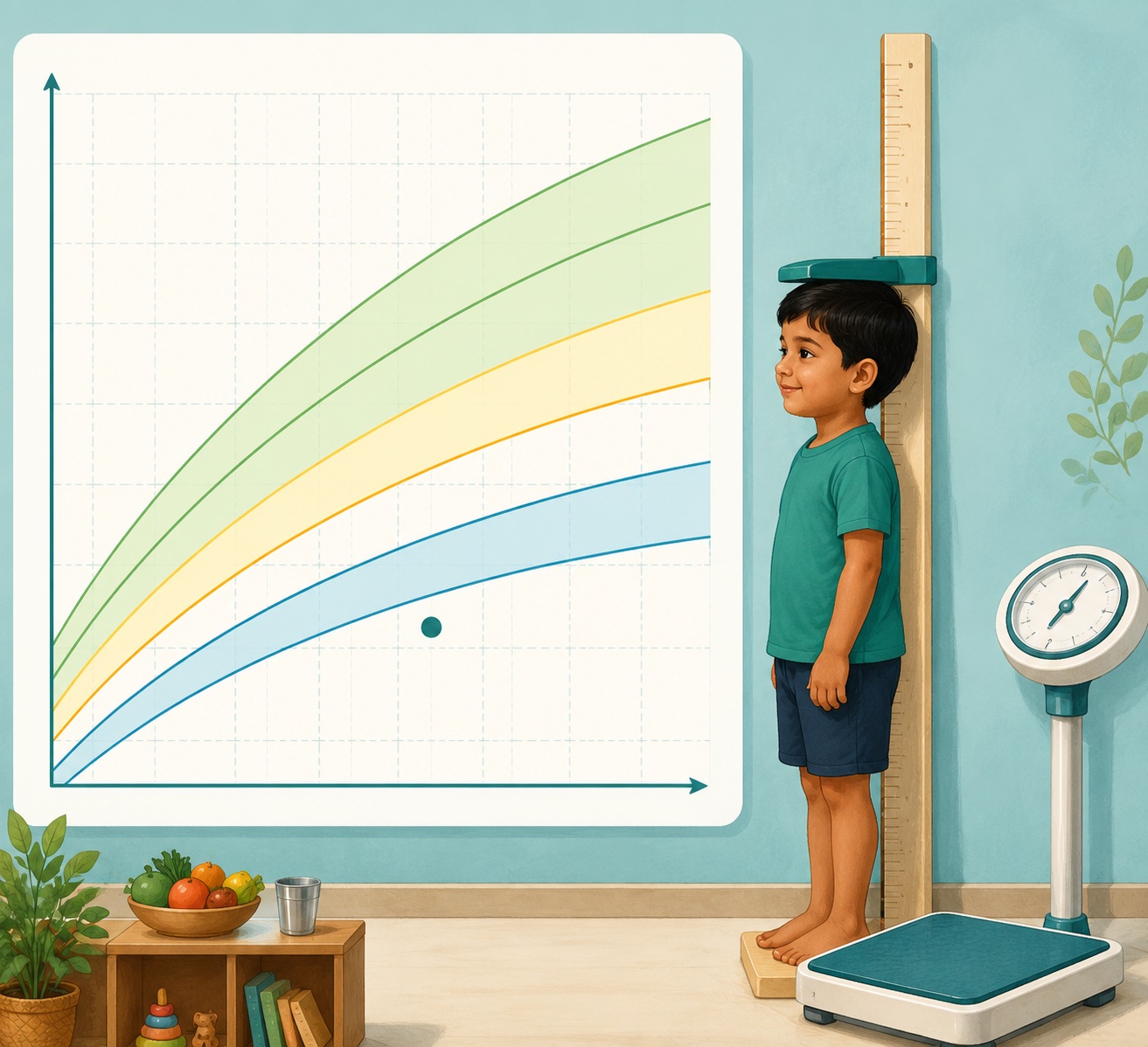
A Z-score shows how far a child's measurement is from the reference median for the same age and sex. In a Poshan Calculator result, it helps explain underweight, stunting, wasting and growth screening signals.
Updated: what is z score in child growth
Not official. This independent site links to official Poshan Tracker and WHO resources, but it is not a government portal.
Z-scores are most useful when they are tied to age, sex and the right growth indicator.
12 months9.6 kg
24 months12.2 kg
60 months18.3 kg
Quick answer
A Z-score is a distance measure. A value near zero is close to the reference median. A negative value is below the median, and a very low value may need closer review depending on whether the indicator is weight-for-age, height-for-age or weight-for-height.
This is why a serious child growth calculator should not rely on one simple height or weight rule. The same weight can mean different things for two children of different ages, sexes and heights.
How common child growth indicators use Z-score context
Indicator
Common term
What it helps screen
Weight-for-age
Underweight
Whether weight is low for age, without separating short stature from recent weight loss.
Height-for-age
Stunting
Whether height or length is low for age, often pointing to longer-term growth concern.
Weight-for-height
Wasting
Whether weight is low for height, often used for acute growth and nutrition concern.
MUAC
SAM/MAM screen
A quick upper-arm measurement used with other signs for acute malnutrition screening.
A point below the middle band is a signal to recheck the measurement and understand the indicator.
Why the Poshan Calculator asks for several inputs
Age, sex, height, weight and MUAC are not decorative fields. They decide which reference comparison makes sense. If age is guessed, weight is entered in the wrong unit or height was copied from an old card, the Z-score style interpretation can become misleading.
For field use, write down the measurement date. A dated record helps the next visit, prevents overreacting to one unusual value and lets a trained worker see whether the pattern is improving or getting worse.
The calculator result is only as reliable as the age, date and measurement entered.
Z-score is not a diagnosis
A low value is a screening signal, not a final diagnosis. The safe response is to recheck measurement technique, look for recent illness or poor appetite, and speak with a health worker when the result remains low or appears with warning signs.
This restrained wording is important for Google authority as well as user safety. Health-adjacent pages should be useful, source-backed and careful about what an online tool can and cannot conclude.
Recheck birth date and completed age in months
Measure height or length carefully
Confirm weight unit is kilograms
Use MUAC when available
Seek direct assessment for severe or repeated low signals
How this guide connects to the site
Use the main Poshan Calculator for the screening result, the height-weight chart for visual reference and the SAM/MAM calculator when MUAC is available. Together these pages create a focused growth-screening knowledge base instead of isolated blog posts.
Weight, height, body proportion and MUAC answer different screening questions.
Questions
Is a negative Z-score always dangerous?
No. A mildly negative value may simply be below the median. The indicator, cutoff band, measurement quality and the child's condition all matter.
Can I use only weight to judge growth?
Weight is useful, but height and MUAC add important context. Weight alone cannot separate stunting from wasting.
Does this website diagnose malnutrition?
No. PoshanTracker.org provides screening education and calculators only. Diagnosis and treatment decisions need trained health workers.