My Child Is Underweight: What Parents Should Check First
If a child looks underweight or a calculator result is low, start with calm checks: age, unit, recent illness, height, MUAC and repeated measurements. A low weight-for-age result needs context.
Updated: my child is underweight
Not official. This independent site links to official Poshan Tracker and WHO resources, but it is not a government portal.
Underweight is a useful first signal, but it needs context from height, illness and repeat records.
12 months9.6 kg
24 months12.2 kg
60 months18.3 kg
First, check the inputs
Many underweight worries begin with a wrong age, pounds entered as kilograms, an old height value or weight taken with heavy clothing. Before searching for treatment advice, recheck the basic measurement details.
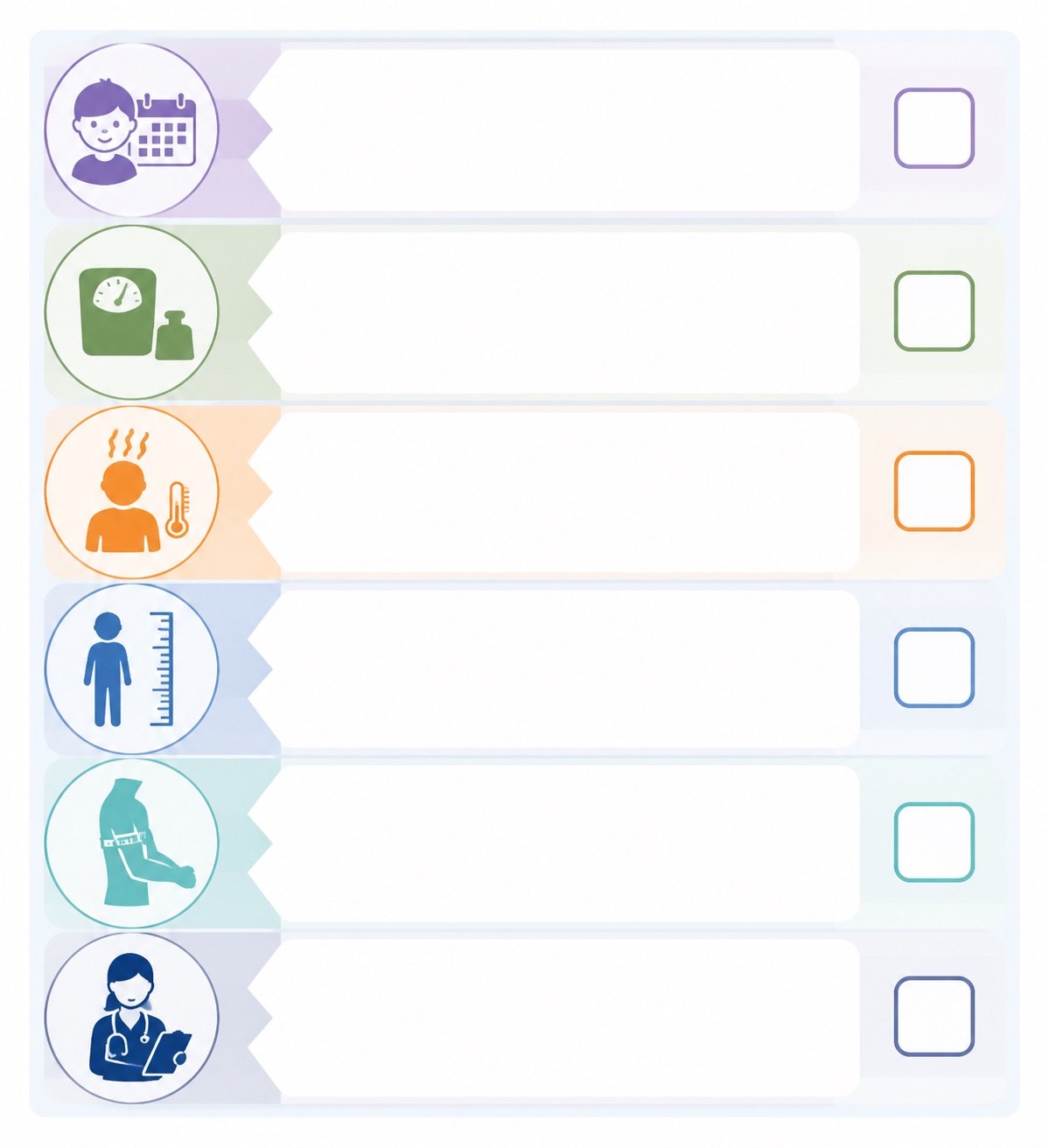
Underweight first-check sequence
Question
Why it matters
Next step
Is age correct?
Weight-for-age depends strongly on age.
Use completed months from date of birth.
Is weight in kilograms?
Wrong units can create a false severe result.
Re-enter the value carefully.
Was the child recently sick?
Illness can temporarily affect appetite and weight.
Record symptoms and timing.
Is height also low?
Low weight alone does not explain the pattern.
Check height-for-age and weight-for-height.
Is MUAC available?
MUAC adds acute screening context.
Use the SAM/MAM calculator where appropriate.
A first-check list makes the result easier to discuss with a trained worker.
Underweight does not name one cause
A child can be underweight because of long-term low height, recent weight loss, feeding difficulty, illness or measurement error. That is why the result should lead to a review, not a single conclusion.
The Poshan Calculator helps by placing weight-for-age beside height-for-age, weight-for-height and MUAC. That makes the result more useful than a single number copied from a chart.
Start with simple checks before assuming one low weight means one fixed cause.
What parents can observe
Bring practical details to a health worker: appetite, fever, diarrhea, vomiting, activity level, swelling, feeding pattern, recent weight loss and the dates of measurements. These details help separate a measurement issue from a child who needs timely care.
Direct review matters when low measurements repeat or warning signs appear.
Use repeated records
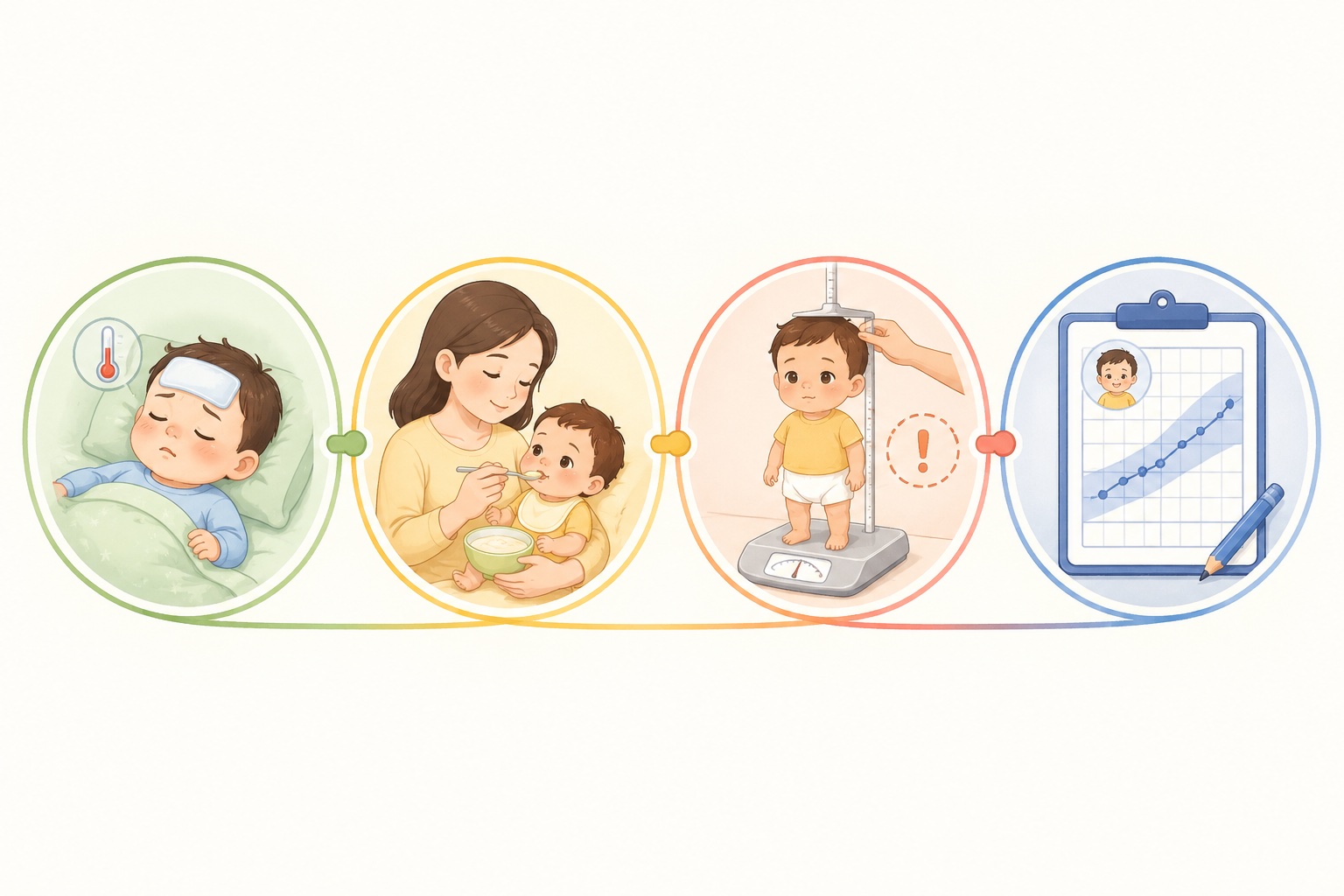
A one-time low value can be wrong or affected by recent illness. Repeated dated measurements are more informative. If values keep falling or remain low, the next step should be direct review rather than trying many calculators.
Repeated records are more useful than one isolated measurement.
Questions
Does underweight always mean malnutrition?
No. It is a screening signal that needs context from height, MUAC, illness history and direct review.
What if the child is active but the result is low?
Do not ignore repeated low values. Recheck the measurement and discuss the pattern with a trained worker.
Should I focus only on food?
Food matters, but illness, appetite, measurement quality and follow-up also matter. Severe warning signs need direct care.