Stunting, Wasting and Underweight: What Is the Difference?
Stunting, wasting and underweight are common child growth terms, but they do not mean the same thing. Understanding the difference helps caregivers and field workers respond more carefully after a Poshan Calculator result.
Updated: stunting wasting underweight difference
Not official. This independent site links to official Poshan Tracker and WHO resources, but it is not a government portal.
Stunting, wasting and underweight are related but not interchangeable terms.
12 months9.6 kg
24 months12.2 kg
60 months18.3 kg
The three terms in one view
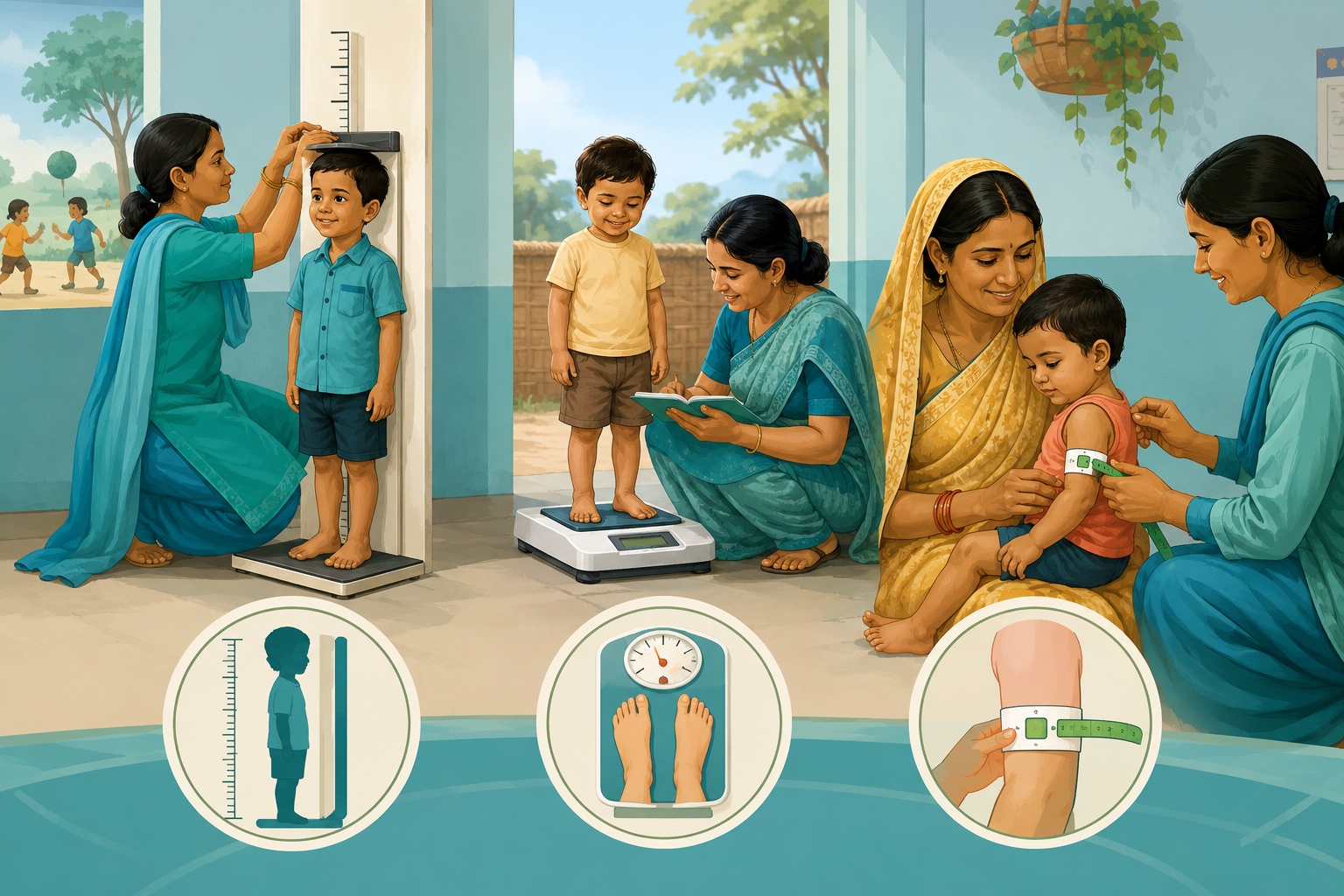
Stunting is low height for age. Wasting is low weight for height. Underweight is low weight for age. A child can have one signal, more than one signal or a measurement error that needs rechecking before any conclusion is made.
The strongest pages in the competitor research explain these surrounding concepts instead of repeating only the phrase Poshan Calculator. This guide uses the same search intent, but keeps the language safer and more practical.
Stunting, wasting and underweight comparison
Term
Indicator behind it
Plain meaning
Stunting
Height-for-age
The child is shorter than expected for age, often a longer-term growth signal.
Wasting
Weight-for-height
The child is lighter than expected for height, often a more acute signal.
Underweight
Weight-for-age
The child weighs less than expected for age, but the cause needs more context.
Use a comparison view to avoid treating one low value as the whole story.
Why one label is not enough
A child with low weight-for-age might be short for age, recently unwell, losing weight quickly or measured incorrectly. That is why the Poshan Calculator combines weight-for-age, height-for-age, weight-for-height and MUAC where possible.
When the result shows more than one signal, do not treat the labels as blame. They are screening terms meant to guide attention, follow-up and conversation with a trained person.
Good explanation reduces panic and helps families understand the next step.
Where MUAC fits
MUAC is a quick upper-arm measurement used for acute malnutrition screening in children 6 to 59 months. It does not replace height and weight, but it can add useful field context when height equipment is not available or urgent screening is needed.
MUAC is a quick acute malnutrition screen, especially useful for children 6 to 59 months.
When to seek direct assessment
Speak with a health worker promptly if a low measurement appears with very low MUAC, swelling of both feet, poor appetite, repeated vomiting, fever, lethargy, rapid weight loss or caregiver concern. Online pages can organize information, but direct assessment matters most.
If the child is stable but measurements are repeatedly low, keep dated records and plan follow-up. Repeated values usually tell a clearer story than one isolated number.
Questions
Can a child be stunted and underweight at the same time?
Yes. Growth indicators can overlap. That is why height, weight, age and MUAC should be reviewed together when possible.
Is wasting more urgent than stunting?
Severe wasting or very low MUAC can be urgent, but any concerning result should be interpreted with symptoms, appetite and local health guidance.
Why does underweight need more context?
Underweight uses weight-for-age, so it cannot tell by itself whether height, recent weight loss or both are driving the result.